

| |
Guidelines on Open Expression
-
I. Principles
- A. The University of Pennsylvania, as a community of scholars,
affirms, supports and cherishes the concepts of freedom of thought,
inquiry, speech, and lawful assembly. The freedom to experiment,
to present and examine alternative data and theories; the freedom
to hear, express, and debate various views; and the freedom to
voice criticism of existing practices and values are fundamental
rights that must be upheld and practiced by the University in
a free society.
- B. Recognizing that the educational processes can include meetings,
demonstrations, and other forms of collective expression, the
University affirms the right of members of the University community
to assemble and demonstrate peaceably in University locations
within the limits of these Guidelines and undertakes to ensure
that such rights shall not be infringed. In keeping with the rights
outlined in I.A. above, the University affirms that the substance
or the nature of the views expressed is not an appropriate basis
for any restriction upon or encouragement of an assembly or a
demonstration. The University also affirms the right of others
to pursue their normal activities within the University and to
be protected from physical injury or property damage. The University
shall attempt to ensure that, at any meeting, event or demonstration
likely to be attended by non-University law enforcement authorities,
the rights provided by these Guidelines are not infringed.
- C. The University shall be vigilant to ensure the continuing
openness and effectiveness of channels of communication among
members of the University community on questions of common interest.
To further this purpose, a Committee on Open Expression has been
established as a standing Committee of the University Council.
The Committee on Open Expression has as its major tasks: participating
in the resolution of conflicts that may arise from incidents or
disturbances implicating these Guidelines; mediating among the
parties to prevent conflicts and violations of these Guidelines;
interpreting these Guidelines; advising administrative officers
when appropriate; and recommending policies and procedures for
the improvement of all levels of communication.
- D. In case of conflict between the principles of the Guidelines
on Open Expression and other University policies, the principles
of the Guidelines shall take precedence.
-
II. Definitions
- A. For the purposes of these guidelines, the "University community"
shall mean the following individuals:
- Persons who are registered as students or who are on an
unexpired official leave of absence.
- All persons who are employed by the University.
- Trustees and associate trustees of the University and members
of Boards of Overseers or other bodies advisory to the University.
- B. For the purposes of these Guidelines, "meeting" and "event"
designate a gathering of persons in a University location previously
reserved for that purpose. Unless designated as public, meetings
are considered to be private. Events are considered to be public.
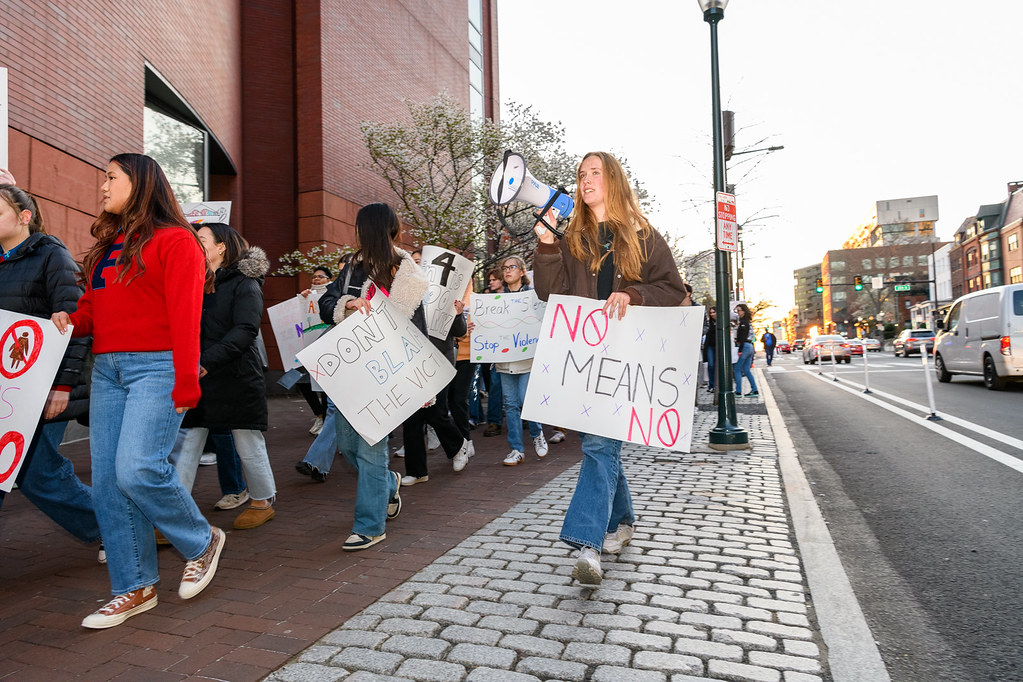
"Demonstration" designates the presence of one or more persons
in a University location with the intent to express a particular
point of view in a manner that attracts attention, as in protest,
rallies, sit-ins, vigils, or similar forms of expression. "University
location" designates:
- The campus of the University;
- Any location owned, leased or used by the University, when
used by members of the University community; and
- Areas immediately adjacent thereto.
-
III. Standards
- A. The University, through the President, the Provost, and
the Vice Provost for University Life, shall act to encourage and
facilitate free and open expression within these Guidelines.
- The University shall publish these Guidelines at least
once each academic year in a manner that brings them to the
attention of members of the University community. The University
shall publish the rules adopted pursuant to IV.B.1 by the
Committee on Open Expression at least once each academic year
in a manner that brings them to the attention of members of
the University community.
- The University shall establish standards for the scheduling
of meetings and events. This shall involve:
- a. Publishing policies and procedures whereby members
of the University community, upon suitable request, can
reserve and use designated spaces within University buildings
for public or private meetings or events;
- b. Publishing policies and procedures whereby members
of the University community, upon suitable request, can
reserve and use designated outdoor spaces on the University
campus for public meetings or events;
- c. Publishing policies and procedures that specifically
address requests involving groups composed entirely or
predominantly of persons who are not members of the University
community (see Section VI);
- d. Consulting with the Committee on Open Expression
with regard to the substance of the policies and procedures
and the manner of their publication; and, if practicable,
consulting with the Committee on Open Expression before
denying a request for use of a room, facility, or space
by an organization recognized by the University for a
reason other than prior assignment of the room, facility,
or space. In any event, any such denial must be reported
promptly to the Committee.
- B. Each member of the University community is expected to know
and follow the Guidelines on Open Expression. A person whose conduct
violates the following Standards may be held accountable for that
conduct, whether or not the Vice Provost or delegate has given
an instruction regarding the conduct in question. Any member of
the University community who is in doubt as to the propriety of
planned conduct may obtain an advisory opinion from the Committee
on Open Expression in advance of the event.
- Individuals or groups violate these Guidelines if:
- a. They interfere unreasonably with the activities
of other persons. The time of day, size, noise level,*
and general tenor of a meeting, event or demonstration
are factors that may be considered in determining whether
conduct is reasonable;
- b. They cause injury to persons or property or threaten
to cause such injury;
- c. They hold meetings, events or demonstrations under
circumstances where health or safety is endangered; or
- d. They knowingly interfere with unimpeded movement
in a University location.
- Individuals or groups violate these Guidelines if they
hold a demonstration in the following locations:
- a. Private offices, research laboratories and associated
facilities, and computer centers; or
- b. Offices, museums, libraries, and other facilities
that normally contain valuable or sensitive materials,
collections, equipment, records protected by law or by
existing University policy such as educational records,
student-related or personnel-related records, or financial
records; or
- c. Classrooms, seminar rooms, auditoriums or meeting
rooms in which classes or private meetings are being held
or are immediately scheduled; or
- d. Hospitals, emergency facilities, communication systems,
utilities, or other facilities or services vital to the
continued functioning of the University.
-
- a. Individuals or groups violate these Guidelines if
they continue to engage in conduct after the Vice Provost
for University Life or delegate has declared that the
conduct is in violation of the Guidelines and has instructed
the participants to modify or terminate their behavior.
Prompt compliance with the instructions shall be a mitigating
factor in any disciplinary proceedings based upon the
immediate conduct to which the instructions refer, unless
the violators are found to have caused or intended to
cause injury to person or property or to have demonstrated
willfully in an impermissible location.
- b. If the individuals or groups refuse to comply with
the Vice Provost's or delegate's order, they may challenge
the appropriateness of the order to the judicial system.
If the judiciary finds that the conduct was protected
by the Guidelines, all charges shall be dismissed.
- c. Individuals or groups complying with the Vice Provost's
or delegate's order may request that the Committee on
Open Expression determine if the Guidelines were properly
interpreted and applied to their conduct.
* An "unreasonable noise level" is defined
as sound above 85 decibels measured by a calibrated
sound-level meter at an "A" weighting on "slow" response
ten feet away from and directly in front of the source,
amplifier or loudspeaker when the latter is within 50
feet of a building.
-
IV. Committee on Open Expression
- A. Composition
- The Committee on Open Expression consists of thirteen members:
five students, five faculty members, two representatives of
the administration, and one A3 representative.
- Members of the Committee are appointed by the steering
committee in the following manner:
- a. Student members shall be nominated from undergraduate
students, graduate students, and graduate professional
students through existing mechanisms for each student
body. Undergraduate and graduate and professional students
shall rotate majority representation each year. Three
undergraduate and two graduate and professional student
members shall alternate with two undergraduate and three
graduate and professional students every other year.
- b. Faculty members shall be nominated by the Senate
Executive Committee.
- c. The administration members shall be nominated by
the President.
- d. The A3 representative shall be nominated by the
A3 Assembly.
- e. Each member shall be selected for a term of one
year beginning the day after Labor Day each year. Any
individual may not serve for more than two consecutive
terms. Before Commencement, the Committee shall inform
the Vice Provost and the University community which of
its members will be available during the summer for mediation
and advising.
- f. Vacancies shall be filled for the unexpired term
by the appropriate nominating body or persons.
- The chair of the Committee shall be selected by the steering
committee from among the members of the Committee on Open
Expression.
- B. Jurisdiction
The Committee has competence to act in issues and controversies
involving open expression in accordance with these Guidelines.
The Committee's responsibilities are the following:
- Issuing rules to interpret or give more specific meaning
to the Guidelines. Before adopting a rule, the Committee must
hold an open hearing on the proposed rule and receive the
views of individuals or groups. An affirmative vote of eight
members is required for adoption, modification or recision
of a rule to be effective.
- Recommending to the University Council proposals to amend
or repeal the Guidelines. An affirmative vote of seven members
is required to make such recommendations.
- Giving advisory opinions interpreting the Guidelines at
the request of a member of the University community for the
purpose of advising that person or the University community.
Such advice is provided to guide future action. If the Committee
does not give a requested opinion, it must indicate its reasons
for not doing so. The Committee must respond to such requests
as soon as feasible but in any event not later than within
one month of the receipt by the Chair of the Committee.
- Giving advisory opinions interpreting the Guidelines at
the request of administrative officials with responsibilities
affecting freedom of expression and communication. Such advice
is provided for the purpose of guiding future action.
- Mediating in situations that involve possible violations
of the Guidelines. Those Committee members available at the
time may act on behalf of the Committee. In carrying out the
mediation function, the Committee or those members present
may advise the responsible administrative officials and any
other person with respect to the implementation of the Guidelines.
Those Committee members who have acted on behalf of the Committee
must report on their activities to the full Committee.
- Reviewing the following administrative decisions for the
purpose of providing advice on future actions.
- a. At the discretion of the Committee, administrative
decisions involving these Guidelines made without consultation
with the full Committee.
- b. All instructions by the Vice Provost or delegate
to modify or terminate behavior under Section III.B.3
of these Guidelines.
- Investigating incidents involving the application of these
Guidelines to aid the Committee in its functions of rulemaking,
recommending changes in the Guidelines or issuing advisory
opinions. Such functions provide guidance to the University
community for future action. The results of Committee investigations
for these purposes shall not be a part of the initiation,
consideration or disposition of disciplinary proceedings,
if any, arising from the incidents.
- Adopting procedures for the functions of the Committee,
varied to suit its several functions, consistent with these
Guidelines. Procedures that are not wholly matters of internal
Committee practice must be made public in advance of implementation.
Except as otherwise provided, the Committee may determine
its own voting procedures.
- Submitting an annual report to the Council and the University
on the status of the Committee's work in the University journal
of record.
- C. Procedures
- Except as provided with respect to the mediation function
in Section IV.B.5, seven members of the Committee constitute
a quorum.
- The Committee can authorize subcommittees, selected from
its own members, to act for the Committee in any matter except
the issuance of rules interpreting or implementing the Guidelines
or the making of recommendations to amend or repeal the Guidelines.
- The Committee shall respect the privacy of individuals
as its general policy and shall maintain the right to declare
the confidentiality of its proceedings.
- a. If a person appearing before the Committee requests
that his or her testimony or information be kept confidential,
the Committee shall consider such a request. The Committee
then shall determine whether to honor that request and
shall inform that person of its decision before testimony
is given.
- b. Minutes of particular Committee meetings may be
declared confidential by the Committee or be so declared
at the discretion of the chair subject to review by the
Committee.
- c. All Committee documents containing confidential
material, as determined by the chair, shall be clearly
marked "confidential" and shall carry a warning against
unauthorized disclosure.
-
V. Responsibilities for Enforcement
- A. It is the responsibility of the Vice Provost for University
Life (hereafter referred to simply as the "Vice Provost") to protect
and maintain the right of open expression under these Guidelines.
- B. Observation of meetings, events or demonstrations, when
deemed necessary by the Vice Provost to protect and maintain open
expression, shall be the responsibility of the Vice Provost, who
may delegate such responsibility. This delegate shall have full
authority to act in the name of the Vice Provost under these Guidelines.
- The observer (Vice Provost or delegate) shall identify
himself or herself to those responsible for the meeting or
event or to the leaders of the demonstration.
- The Vice Provost shall attempt to inform the chair of the
Committee on Open Expression of meetings, events or demonstrations
to which an observer will be sent. The chair may designate
a member or members of the Committee to accompany and advise
the observer. Such a Committee representative shall also be
identified to those responsible for the meeting or event or
to the leaders of the demonstration.
- Except in emergencies, the Vice Provost's authority under
these Guidelines shall not be delegated to employees of the
University's Department of Public Safety. The role of public
safety personnel at a meeting, event or demonstration is defined
below, in Section V.C.3.
- Any observer or Committee representative who attends a
meeting, event or demonstration shall respect the privacy
of those involved. If there has been no violation of these
Guidelines, other University regulations, or applicable laws,
an observer, committee representative, or public safety employee
who attends a meeting, event or demonstration shall not report
on the presence of any person at such meeting, event or demonstration.
- C. The Vice Provost or delegate is responsible for enforcing
Section III.B. and may instruct anyone whose behavior is violating
or threatens to violate these Guidelines to modify or terminate
such behavior. The instruction shall include notice that failure
or refusal to comply is a further violation according to Section
III.B. of these Guidelines. However, an instruction or warning
by the Vice Provost or delegate is not a prerequisite for a finding
that a violation has occurred.
- When the Vice Provost or delegate declares that an individual
or a group has violated the Guidelines, he or she may request
to examine their University identification.
- a. Failure to comply with this request is in violation
of the Guidelines.
- b. In the event that any person(s) are deemed by the
Vice Provost or delegate, in consultation with available
members of the Committee on Open Expression, to have violated
the Guidelines and such person(s) refuse to show University
or other identification, the Vice Provost or delegate
shall if practicable inquire of other individuals present
as to the identity of the claimed violator(s). Identification
by two other individuals shall suffice to establish identity.
Should it not be possible to establish identity in this
way, the Vice Provost or delegate may direct that photographs
be taken of the participant(s) in the claimed violation.
The Vice Provost or delegate must warn the individual(s)
that their photographs will be taken unless identification
is presented. Photographs and videotapes obtained without
such warning may not be used as evidence in disciplinary
proceedings. It is preferred that a member of the Committee
on Open Expression take any such photographs; however,
if no such person is able or willing to do so, another
member of the University community may be requested to
do so. As soon as safely practicable, all such photographs
shall be turned over to the Vice Provost or delegate.
Any photographs taken (including videotapes and negatives)
shall be used solely by the Office of Student Conduct
for the purpose of investigation of alleged violations
and possible identification of alleged violators of these
Guidelines. If it is determined that no violation has
occurred, the Vice Provost or delegate shall destroy the
photographs. If a violation is found to have occurred,
after identification has been made and the case has been
adjudicated, the Vice Provost or delegate shall destroy
the photographs. None of the photographs shall be published.
After each incident at which photographs are taken, the
Committee on Open Expression shall report on the incident
to the University Council, via the chair of the University
Council Steering Committee, regarding what happened in
the incident, which individuals saw the photographs, and
the disposition of the photographs.
- In carrying out this responsibility for safeguarding the
right of open expression, the Vice Provost shall obtain the
advice and recommendation of the representatives of the Committee
on Open Expression whenever feasible.
- The Vice Provost or delegate may request members of the
University Police to attend meetings, events or demonstrations
to help protect the open expression of those involved.
- a. Any person acting as an agent of the Division of
Public Safety who attends a meeting, event or demonstration
in a University location shall be clearly identifiable
as such and in normal duty uniform. (Arms may be carried
if they are part of "normal duty uniform.")
- b. Public Safety personnel also may attend meetings,
events or demonstrations when requested to do so by the
person or group responsible for the event, when prominent
public figures are involved, or when the Commissioner
of Public Safety or delegate determines that there exists
an imminent danger of violence at the event.
- Terminating a meeting, event or demonstration by force
is a most serious step, as this action may exacerbate existing
tensions and may lead to personal injury and property damage.
- a. Avoidance of injury to persons by the continuation
of a meeting, event or demonstration is a key factor in
determining whether it should be forcibly terminated.
Property damage and significant interference with educational
processes are also factors to be considered and may be
of sufficient magnitude to warrant forcible termination.
- b. Whenever possible, the Vice Provost or delegate
should consult with the Committee on Open Expression before
seeking a court injunction against those involved in a
meeting, event or demonstration or calling for police
action.
- c. The Vice Provost or delegate shall inform those
involved that he or she intends to seek an injunction
or call for police intervention before he or she does
so.
- d. When a meeting, event or demonstration is forcibly
terminated, a full statement of the circumstances leading
to the incident shall be publicized by the Vice Provost
within the University.
- D.
- Cases involving undergraduate students are referred to
the Office of Student Conduct who investigates the event and
decides what disciplinary proceedings, if any, to pursue.
- Cases involving graduate or professional students are referred
to the Office of Student Conduct or to the established disciplinary
body of the school in which the student is enrolled.
- Cases involving faculty are referred to the appropriate
Dean or to the Provost.
- Cases involving University staff or administrators are
referred to that individual's supervisor or any other person
with supervisory responsibility over that individual.
- Cases involving trustees and associate trustees of the
University and members of the Boards of Overseers or other
bodies advisory to the University are referred to the Executive
Committee of the Trustees.
- E. The Division of Public Safety shall not collect or maintain
information about members of the University community *,
except in connection with alleged crimes, violations of University
regulations, or as specifically authorized in writing by the President
**. This regulation shall not affect personnel
information concerning current, past or prospective employees
of the Division of Public Safety.
-
-
VI. Non-University Persons
These Guidelines address themselves explicitly to forms of individual
and collective expression in a University location by members
of the University community. The extent to which the privileges
and obligations of these Guidelines may be made applicable in
particular circumstances to individuals who are not members of
the University community shall be determined by the Vice Provost
or delegate. Participants in meetings, events and demonstrations
in a University location are required to comply with the instructions
of the Vice Provost or delegate. (See III.A.2.c.)
* Videotaped or closed circuit television
information collected by posted, fixed location cameras is excluded,
as long as it is in conformance with the rules of the CCTV policy
as of January 13, 1999.
** to Public Safety and the Open Expression
Committee.
-
(Source: Office of the President, Revised,
1993
Footnotes to V.E added 4/99)
|

|
Visit the Divison of University Life |
|